Glass has quietly become one of the most sophisticated materials in modern construction. What was once a simple barrier against the elements is now a load-bearing, structurally engineered element capable of supporting entire buildings. As architects push toward transparency and open design, structural glass is stepping into roles once reserved for steel and concrete. Here’s a look at the trends shaping where this material is headed.
Glass as a Load-Bearing Element
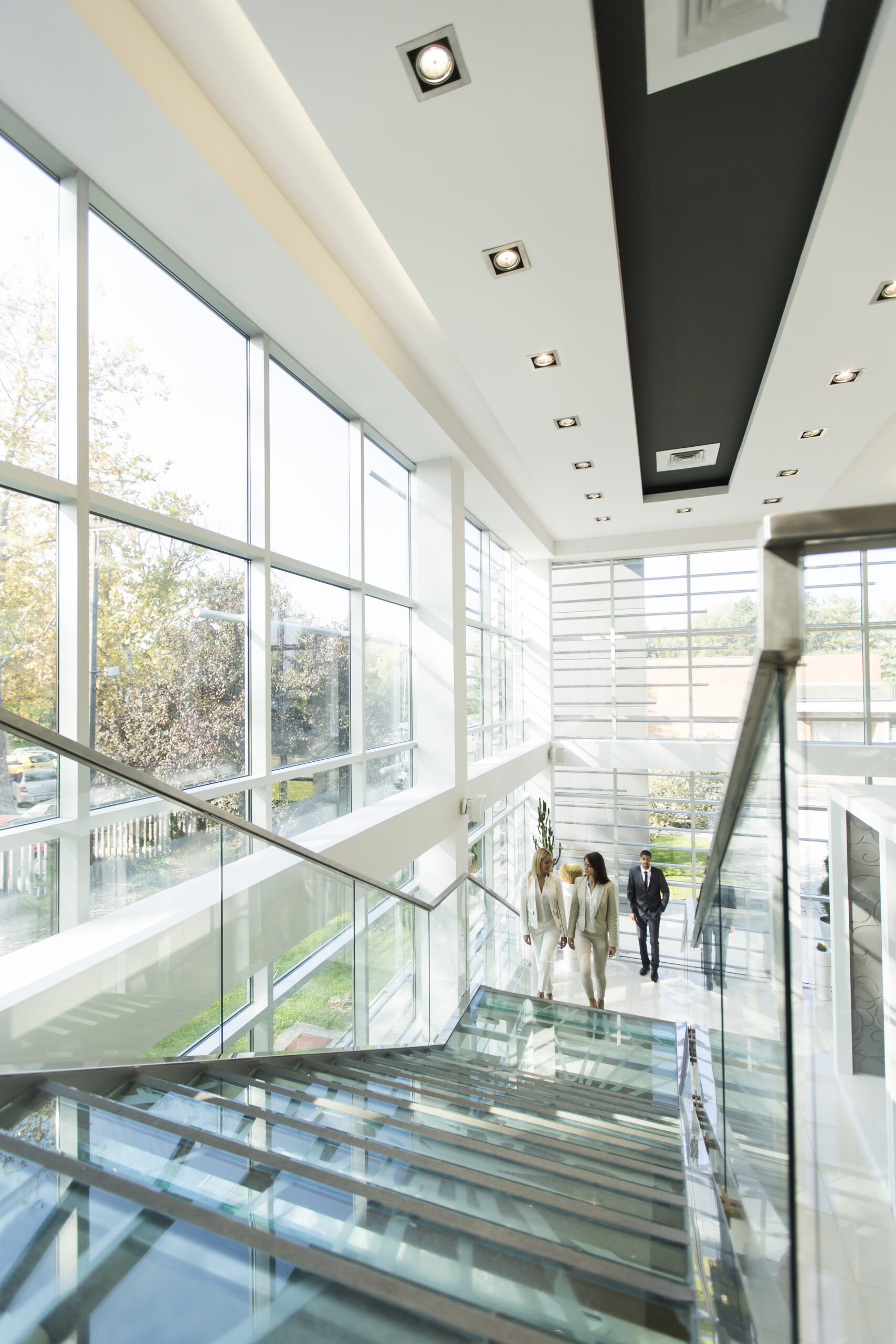
The most significant shift in structural glass design is its expanding role as a primary structural component. Glass beams, columns, and fins are increasingly used to support floors, roofs, and staircases without the need for traditional framing. This approach allows designers to create spaces that feel almost weightless, with walls and supports that disappear visually while still carrying real structural loads.
This trend reflects a broader move away from treating glass as an infill material and toward treating it as a true structural partner. Engineers are now calculating glass the way they would steel, accounting for load paths, redundancy, and failure modes with the same rigor applied to conventional materials.
Advances in Laminated and Interlayer Technology
Much of the progress in structural glass comes down to what happens between the panes rather than the glass itself. Modern interlayers, including advanced polymer films, have transformed laminated glass from a safety feature into a structural asset. These interlayers help distribute stress across multiple layers, allowing broken glass to retain load-bearing capacity rather than failing catastrophically.
This redundancy is critical for structural applications. If one layer of a laminated panel cracks, the interlayer holds the assembly together and keeps it functioning until repairs can be made. As interlayer formulations continue to improve, designers are gaining confidence to use glass in increasingly demanding structural roles.
Digital Fabrication and Precision Engineering
Structural glass design has also benefited enormously from digital tools that were unavailable to earlier generations of architects. Parametric modeling and finite element analysis allow engineers to simulate how glass will behave under wind loads, thermal stress, and seismic activity before a single panel is fabricated. This level of precision reduces guesswork and allows for more ambitious geometries.
Digital fabrication techniques have followed suit, enabling curved and complex glass shapes that would have been impractical to produce by hand. Combined with simulation software, this has opened the door to freeform glass structures that maintain structural integrity while achieving striking visual effects.
Integration with Smart Building Systems
Another trend gaining momentum is the integration of structural glass with smart technology. Embedded sensors within glass assemblies can now monitor stress levels, temperature fluctuations, and even micro-fractures in real time. This data feeds into building management systems, giving facility teams early warning of potential issues long before they become visible problems.
Some structural glass systems are also incorporating electrochromic or thermochromic capabilities, allowing panels to adjust their tint in response to sunlight. This dual functionality means glass can serve as both a structural and environmental control element, reducing the need for separate shading systems while maintaining transparency.
Sustainability and Energy Performance
Sustainability has become a driving force behind innovation in structural glass. Manufacturers are focusing on reducing the embodied carbon of glass production while improving thermal performance to reduce a building’s energy demands. Triple glazing, low-emissivity coatings, and improved framing systems all contribute to glass structures that perform better across a building’s lifespan.
There’s also growing interest in the circularity of glass as a material. Because glass can be recycled repeatedly without degrading in quality, designers are exploring ways to incorporate recycled content into structural applications without compromising safety or performance standards.
Looking Ahead
Structural glass design sits at an interesting intersection of engineering, technology, and aesthetics. As interlayer materials improve, digital tools become more sophisticated, and sustainability pressures mount, the boundaries of what glass can achieve structurally will keep expanding. Buildings that once relied on heavy framing to create openness are giving way to structures where glass itself provides both the view and the support.
For architects and engineers, staying current with these trends isn’t just about aesthetics. It’s about understanding how a material once considered fragile is becoming one of the most technically demanding and rewarding elements in contemporary construction.