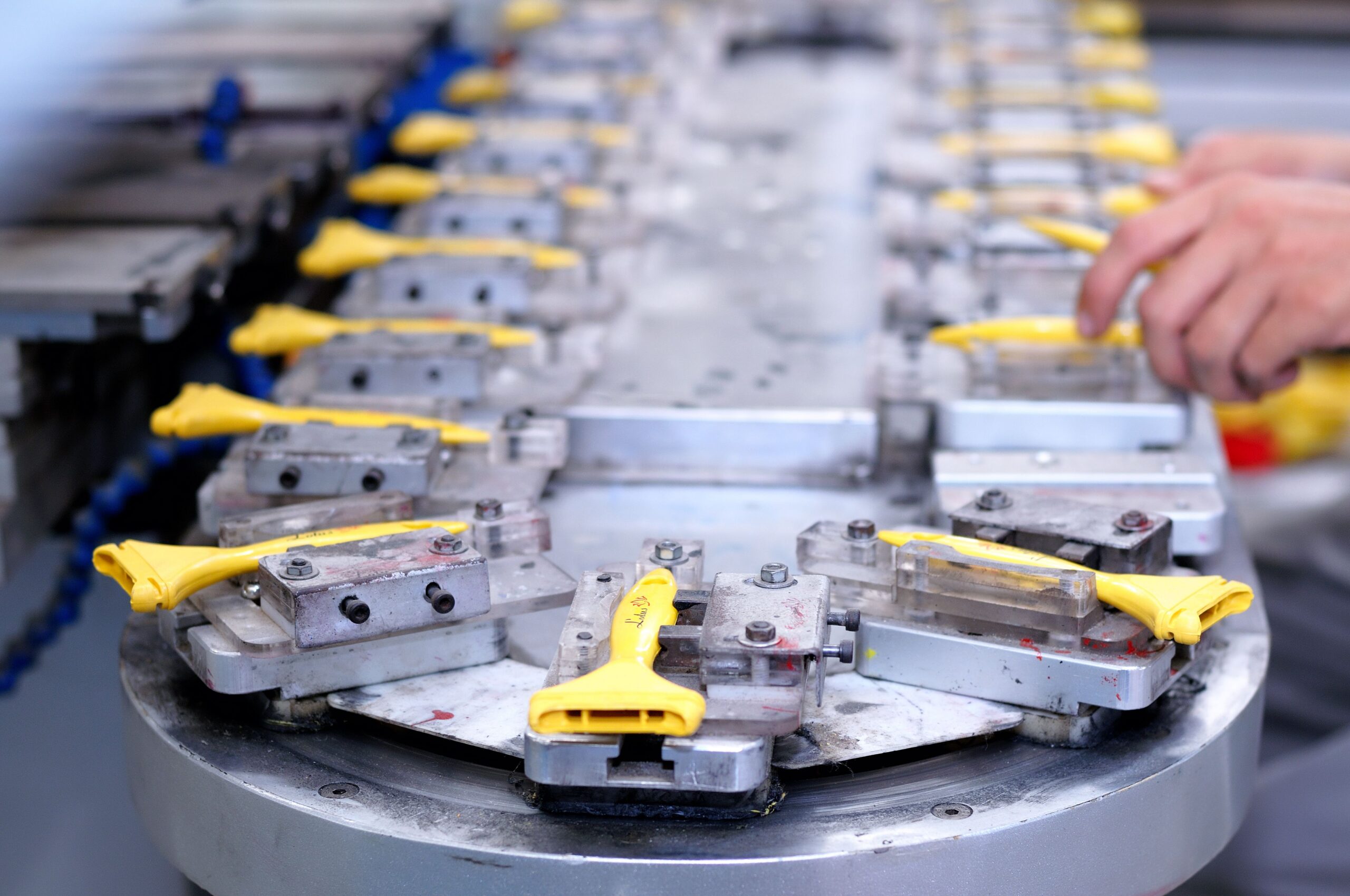
A production injection mold typically costs between 3,000 dollars for a simple prototype tool and 50,000 dollars or more for a complex multi-cavity production mold, with high-tonnage or highly detailed tooling running past 100,000 dollars. Published manufacturing cost guides put the range that wide because the mold, not the plastic, is where the money sits. For a first-time founder, understanding that number is the difference between a realistic budget and a stalled project.
Why the mold is the big number
In injection molding, the tool is the dominant upfront cost. The plastic itself is cheap: thermoplastic pellets run roughly 1 to 5 dollars per kilogram, and a single part may use only grams of it. The expense is the steel or aluminum mold that has to be designed, machined, textured, and validated before a single good part comes out.
That is why per-part economics flip so hard with volume. A part that costs 15 cents each at 100,000 units can cost more than 100 dollars each at 10 units, because the tooling cost gets divided across however many parts you make. At low volume the mold dominates the math. At high volume the plastic and the machine cycle time take over. Knowing which side of that curve a product sits on decides whether injection molding even makes sense yet.
The published ranges, broken down
Manufacturing cost guides converge on a rough hierarchy:
- Prototype and simple molds: about 3,000 to 6,000 dollars for a basic, low-cavity tool.
- Aluminum molds for mid-volume runs: roughly 2,000 to 5,000 dollars for runs in the 1,000 to 5,000 unit range, per cost figures published by the 3D printing firm Formlabs.
- Production molds: 25,000 to 50,000 dollars or more for hardened-steel, multi-cavity tooling built to survive long runs.
- Complex or high-tonnage tooling: 100,000 dollars and up, reaching several hundred thousand for large parts with slides, lifters, and tight cosmetic requirements.
The cost drivers behind those numbers are consistent: part size, geometric complexity, the number of cavities in the mold, the grade of steel, and where the tool is built. A part that needs internal threads, undercuts, or near-optical surface finish forces complex tooling, and complexity is the single biggest multiplier.
Soft tooling as a lower-cost step
There are cheaper rungs below a full production mold. A low-volume mold printed on a resin 3D printer can be made for as little as 100 dollars and produce a hundred or so parts, useful for testing fit and function. These soft tools wear out fast and are not built for production, but they let an inventor put real plastic parts in hand without committing to a steel mold.
The trap of tooling too early
The expensive mistake is cutting a production mold before the design is settled. Every change after the steel is machined means rework or a new tool, and tooling rework is one of the most common ways a first-time founder blows a budget. A mold built around a design that still has open questions is a bet that the design is final, and early designs rarely are.
This is the practical case for validating a product virtually before any steel is cut. A photorealistic rendering and a CAD model let an inventor confirm appearance, check fit, and gather feedback while changes still cost a redraw. Companies that license inventions routinely evaluate them off renderings and CAD, which means an inventor can often test the market and even secure a deal before committing to tooling at all.
Enhance Innovations, a product development firm founded in 2010 in Champlin, Minnesota, is built around that virtual-first sequence. It keeps industrial design, engineering, marketing, and licensing under one roof, and its core deliverable is a virtual prototype, meaning renderings, a CAD model, and optional animation, rather than a hand-built physical unit. Physical prototypes and tooling are scoped only when a specific project actually needs them. The order of operations matters: design and validate first, then spend on the mold once the geometry is locked.
How to budget realistically
A first-time founder should treat the mold as a separate, large line item and should size it against planned volume rather than hope. Get a design-for-manufacturability review before requesting tooling quotes, because the same part can quote at wildly different prices depending on how it was designed for the molding process. Build the break-even math: divide the tooling cost across the realistic first production run and add the per-part plastic and machine cost to see the true landed cost per unit.
Inventors planning a manufacturing budget can ground the surrounding decisions in neutral guidance. The U.S. Small Business Administration’s guide to calculating startup costs covers how to fold tooling and inventory into a funding plan, and the USPTO’s patent basics explains how to protect a design before it goes to a mold shop. For deeper engineering context, university manufacturing programs such as Michigan Tech’s mechanical engineering department publish accessible material on molding processes.
The mold is the number that surprises people. Plan for it as the largest single cost, validate the design before you commit to it, and the rest of the injection molding budget becomes predictable.