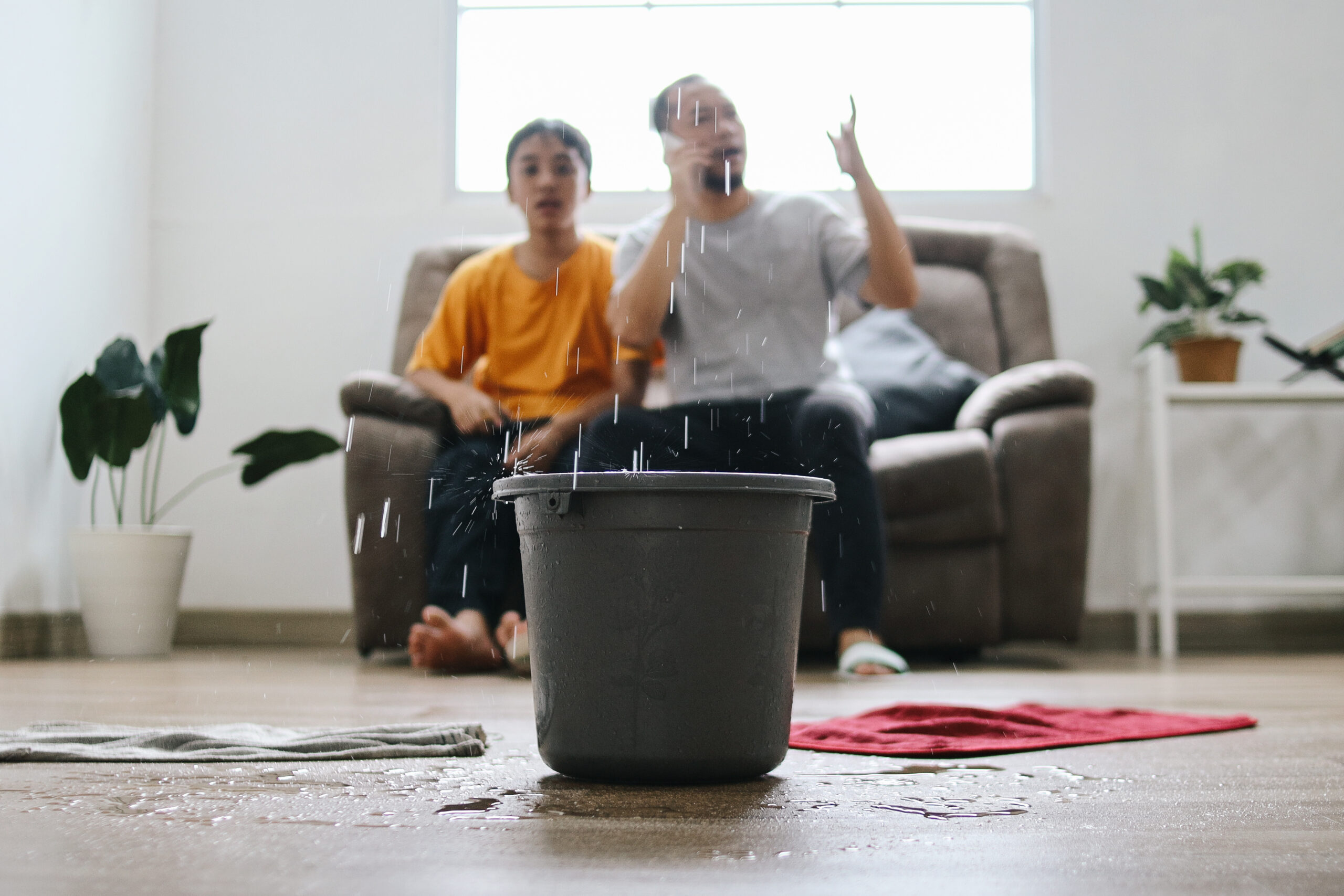
When water invades your home — whether from a burst pipe, a flooded basement, or a roof leak — the instinct is to grab whatever tool is nearby and start removing water fast. For many homeowners, that means reaching for the Shop-Vac. It’s powerful, it’s convenient, and it seems to do the job. But here’s the hard truth: sucking up standing water is only the first step of a much more complex process. And stopping there can lead to serious, costly consequences.
Water Goes Where You Can’t See
The fundamental problem with relying on a wet-dry vacuum is that it only addresses surface water. What it can’t touch is the moisture that has already migrated deep into your structure.
Within minutes of a water event, moisture begins absorbing into drywall, wood framing, subfloors, insulation, and even concrete. These materials are porous, and they act like sponges. By the time you’ve vacuumed up the visible puddles, water has already traveled far beyond the surface — into wall cavities, under flooring, and behind baseboards.
That hidden moisture is where the real damage begins.
The Problem With Residual Moisture
Structural materials that remain wet for an extended period don’t just stay damp — they deteriorate. Wood framing can warp, swell, and eventually rot. Drywall weakens and loses structural integrity. Flooring buckles and separates.
More urgently, mold can begin to develop within as little as 24 to 48 hours of a moisture event. Mold doesn’t need much — just organic material, warmth, and humidity. Once it establishes itself inside wall cavities or beneath flooring, it becomes significantly harder and more expensive to remediate.
A Shop-Vac does nothing to address the moisture content inside these materials. Even if the floor feels dry to the touch, the subfloor beneath it may still be saturated.
What Professional Structural Drying Actually Does
Structural drying is a science-based approach that targets moisture at every level — not just on the surface. It involves a combination of specialized equipment working together:
- Industrial air movers accelerate evaporation by moving large volumes of air across wet surfaces, pulling moisture out of porous materials.
- Commercial dehumidifiers capture that evaporated moisture from the air before it can re-absorb into surrounding materials or create high-humidity conditions that encourage mold.
- Moisture meters and thermal imaging allow technicians to map exactly where moisture is hiding, even inside walls or under floors — invisible to the naked eye.
The process is also carefully monitored. Drying isn’t complete just because things feel dry — it’s complete when moisture readings return to acceptable levels throughout the affected structure.
Why Timing Is Everything
Every hour that passes after a water event increases the risk of secondary damage. The longer moisture stays trapped in building materials, the deeper it penetrates and the harder it becomes to extract. Professional drying equipment is designed to work aggressively in that critical early window to prevent damage from compounding.
A Shop-Vac, for all its usefulness, simply doesn’t move enough air or remove enough atmospheric moisture to compete with that timeline.
The Bottom Line
Using a Shop-Vac after water damage isn’t wrong — it’s just incomplete. Removing standing water is a necessary first step, but it’s not a drying strategy. Structural drying requires purpose-built equipment, calibrated technique, and professional monitoring to ensure moisture is fully extracted from the materials that make up your home.
Skipping that process doesn’t save money. It defers a much larger problem. When water gets in, the response needs to go deeper than the surface — because that’s exactly where the damage does.